
Related Articles
Modern consumers interact with brands across multiple platforms throughout the day. They browse social media, search on Google, watch videos, and encounter outdoor advertising during their daily commute. In this environment, relying on a single advertising channel is no longer sufficient to capture attention or drive meaningful engagement.
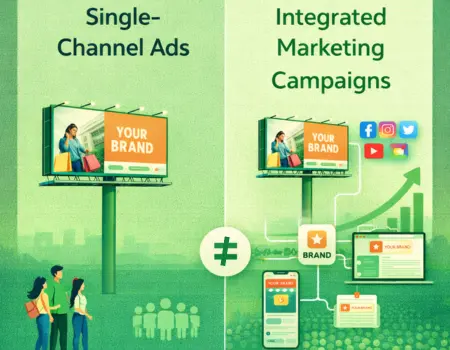
This is why Integrated Marketing Campaigns have become essential for businesses aiming to maximize visibility and improve results. Instead of focusing on one channel, integrated campaigns combine multiple touchpoints to deliver a unified message across platforms.
By leveraging cross-channel advertising, brands can engage audiences at different stages of the customer journey. This approach ensures that marketing messages are reinforced through repeated exposure, which significantly improves advertising effectiveness.
Companies that adopt Integrated Marketing Campaigns benefit from stronger brand recall, better audience targeting, and more consistent messaging. When executed strategically, integrated campaigns outperform single-channel ads by creating a seamless and connected customer experience.
Understanding Integrated Marketing Campaigns in Modern Advertising
At its core, Integrated Marketing Campaigns involve coordinating multiple marketing channels to deliver a consistent and unified brand message. These channels may include digital advertising, social media, search engines, email marketing, and outdoor media.
Unlike isolated campaigns, integrated strategies ensure that every touchpoint supports the same objective. This alignment improves advertising effectiveness by reinforcing messaging and increasing audience engagement.
In today’s competitive landscape, cross-channel advertising is critical because consumers rarely interact with a brand through a single platform. They may first see an advertisement on social media, then search for the brand online, and later encounter it again through display or outdoor advertising.
According to insights on integrated marketing strategy trends, brands that combine multiple channels achieve higher engagement and better customer retention compared to single-channel approaches.
The Role of Cross-Channel Advertising
Cross-channel advertising plays a central role in the success of Integrated Marketing Campaigns. It allows brands to connect with audiences across different platforms while maintaining a consistent message.
For example, a user might see a brand’s advertisement on Instagram, later encounter a Google search ad, and then receive an email promotion. Each interaction reinforces the same message, increasing the likelihood of conversion.
This repeated exposure improves advertising effectiveness because it keeps the brand top of mind. It also allows businesses to guide customers through the decision-making process more effectively.
When implemented correctly, cross-channel advertising ensures that no opportunity for engagement is missed.
Aligning Messaging Across Platforms
Consistency is a key factor in the success of Integrated Marketing Campaigns. When messaging is aligned across platforms, it creates a cohesive brand identity that customers can easily recognize.
Inconsistent messaging, on the other hand, can confuse audiences and reduce trust. For example, if a brand communicates different value propositions on social media and search ads, it may weaken its overall impact.
By aligning messaging across all channels, businesses improve advertising effectiveness and strengthen brand positioning.
A strong integrated approach ensures that visual elements, tone, and messaging remain consistent across all platforms. This alignment enhances customer experience and increases the effectiveness of cross-channel advertising strategies.
Benefits of Integrated Marketing Campaigns for Advertising Effectiveness

The primary advantage of Integrated Marketing Campaigns is their ability to deliver better results compared to isolated campaigns. By combining multiple channels, brands can maximize reach, increase engagement, and improve overall performance.
Integrated strategies also provide better insights into customer behavior, allowing businesses to optimize campaigns more effectively.
When brands use cross-channel advertising in a structured way, they can significantly improve advertising effectiveness and achieve stronger marketing outcomes.
Improved Audience Reach and Frequency
One of the most important benefits of Integrated Marketing Campaigns is increased audience reach. By using multiple channels, brands can connect with a broader audience across different platforms.
In addition to reach, frequency also plays a critical role. Repeated exposure to a brand message increases the likelihood that consumers will remember and act on it.
Cross-channel advertising ensures that audiences encounter the brand multiple times across different touchpoints. This repeated interaction strengthens brand recall and improves advertising effectiveness.
For example, a customer who sees a brand on social media and later encounters it in search results is more likely to engage than someone who sees the brand only once.
Consistent Brand Experience
A consistent brand experience is essential for building trust and credibility. Integrated Marketing Campaigns ensure that customers receive the same message regardless of the platform they are using.
This consistency helps create a strong brand identity and improves customer perception.
When businesses align their messaging across channels, they enhance the effectiveness of cross-channel advertising and deliver a seamless experience.
According to research on importance of integrated marketing, consistent messaging across channels leads to higher brand recognition and customer trust.
By maintaining a unified brand voice, companies can significantly improve advertising effectiveness and long-term customer relationships.
Measuring Advertising Effectiveness in Integrated Campaigns
Tracking performance is critical for understanding the success of Integrated Marketing Campaigns. Unlike single-channel campaigns, integrated strategies require a more comprehensive approach to measurement.
Marketers must analyze data from multiple platforms to evaluate how each channel contributes to overall performance.
Effective measurement ensures that cross-channel advertising efforts are aligned with business goals and deliver measurable results.
Cross-Channel Performance Metrics
To evaluate advertising effectiveness, businesses must track key performance indicators across all channels. These metrics may include impressions, click-through rates, conversions, and engagement levels.
By analyzing these metrics collectively, marketers can understand how different channels work together to drive results.
For example, social media campaigns may generate awareness, while search ads drive conversions. Together, these channels contribute to the success of Integrated Marketing Campaigns.
Tracking cross-channel performance helps businesses identify which strategies are most effective and where improvements are needed.
This data-driven approach enhances the impact of cross-channel advertising and ensures continuous optimization.
Attribution in Multi-Platform Campaigns
Attribution is one of the most important aspects of measuring advertising effectiveness in integrated campaigns. It involves identifying which channels contribute to conversions and how they influence customer decisions.
In Integrated Marketing Campaigns, customers often interact with multiple touchpoints before making a purchase. Attribution models help marketers understand the role of each interaction in the conversion process.
For example, a customer may first discover a brand through social media, then click on a search ad, and finally convert after receiving an email.
By analyzing attribution data, businesses can optimize their cross-channel advertising strategies and allocate budgets more effectively.
Accurate attribution ensures that all channels are evaluated fairly and that marketing investments deliver maximum return.
Conclusion
In today’s multi-platform environment, relying on a single advertising channel is no longer sufficient. Consumers interact with brands across multiple touchpoints, making it essential for businesses to adopt a more comprehensive approach.
Integrated Marketing Campaigns provide a powerful solution by combining multiple channels into a unified strategy. Through effective cross-channel advertising, brands can reach audiences at different stages of the customer journey and reinforce their messaging.
This approach significantly improves advertising effectiveness, leading to better engagement, higher conversion rates, and stronger brand recognition.
By aligning messaging, increasing reach, and using data-driven measurement techniques, businesses can maximize the impact of their marketing efforts.
Ultimately, companies that invest in Integrated Marketing Campaigns gain a competitive advantage by delivering a consistent and engaging experience across all platforms.
Share
Trending Topics
-

-
-
 March 09, 2026
 -

-
 Feb 23, 2026
 -

-
 Feb 09, 2026
 -

-
 November 19, 2025
How Are Modern Advertising Agencies Using AI to Boost Campaigns
-
 November 17, 2025
How the Best Outdoor Advertising Agencies in India Stand Out
-
 November 12, 2025
 -
 November 10, 2025
How Do You Choose the Best Advertising Agency for Your Business
-
 November 07, 2025
 -
 November 01, 2025
Abhishek Gupta
A strategy-led growth architect blending business insight, brand thinking, and execution rigor to build scalable, market-relevant brands.