Related Articles

Digital marketing promises speed, measurability, and precision. Yet many brands investing heavily in performance channels struggle with rising costs, inconsistent returns, and creative fatigue.
The reason is rarely digital execution alone.
Brands that invest in ATL advertising consistently outperform digital only competitors. Their campaigns convert faster. Their acquisition costs are lower. Their results are more stable. Their creative lasts longer.
Why does this happen?
Because ATL campaigns create familiarity before a click ever happens. They build trust before the first retargeting impression. They shape perception long before a consumer begins comparing options.
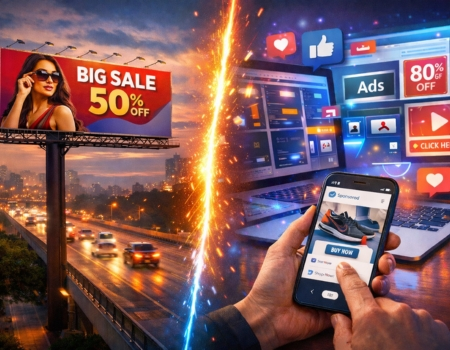
In today’s fragmented media environment, ATL does not compete with digital. It strengthens it.
Let us explore why brands with strong ATL foundations win faster in digital environments.
Familiarity Lowers Digital Friction
Digital friction is the invisible resistance users feel before converting. Strong ATL presence significantly reduces this resistance.
What Digital Friction Looks Like in Performance Marketing
Digital friction typically appears as:
- High bounce rates
- Low add to cart ratios
- Rising cost per lead
- Weak retargeting performance
When users encounter an unfamiliar brand in a paid ad, skepticism increases. Even if the creative is strong, doubt remains.
Without prior exposure through ATL advertising, every digital touchpoint must work harder to build trust from zero.
This is why digital only brands often experience volatility. They rely entirely on performance marketing to create and capture demand at the same time.
How ATL Builds Mental Availability
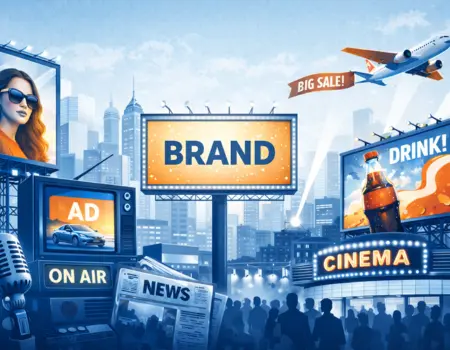
ATL campaigns build mental availability at scale. Television, radio, print, and large format outdoor placements repeatedly expose audiences to a brand in non transactional settings.
This repetition creates memory structures.
When users later encounter the brand through search or social ads, the name feels familiar. Familiarity reduces evaluation time and lowers resistance.
ATL advertising does not necessarily drive immediate clicks. Instead, it builds recognition that makes future clicks easier and more confident.
Cold Traffic vs Pre Conditioned Audiences
Cold traffic refers to users with no prior exposure to your brand. These users require more persuasion, higher frequency, and constant creative testing.
Pre conditioned audiences influenced by ATL campaigns behave differently. They:
- Click faster
- Spend more time on site
- Convert at higher rates
- Require fewer touchpoints
This is where ATL becomes a digital accelerator. It prepares the market before performance marketing activates intent.
Brand Trust vs Click Through Rates
Digital dashboards often emphasize click through rate as a primary success metric. However, CTR without trust can be misleading.
Why Familiar Brands Earn Higher CTRs
When users recognize a brand from ATL advertising, they are more likely to click.
Recognition signals credibility.
ATL campaigns create authority positioning at scale. A brand seen on television or major outdoor placements appears established and legitimate. That perception directly improves digital engagement metrics.
Higher CTR often reflects trust built through ATL, not just creative execution.
The Risk of Optimizing CTR Without Trust
Many brands aggressively optimize for CTR without investing in brand equity.
They use exaggerated claims, dramatic hooks, or deep discounts. While this may increase clicks temporarily, it does not strengthen long term brand perception.
Without ATL support, performance marketing becomes a constant battle for attention.
When trust is weak, post click performance declines. Users hesitate. Conversions drop. Costs increase.
Trust Driven Clicks vs Curiosity Clicks
There is a clear difference between curiosity clicks and trust driven clicks.
Curiosity clicks are driven by intrigue and often result in quick exits.
Trust driven clicks are backed by prior familiarity created by ATL campaigns. These clicks show stronger engagement and higher conversion intent.
ATL builds the foundation for trust driven digital behavior.
How ATL Improves Core Digital Performance Metrics

Strong ATL advertising positively impacts digital performance in measurable ways.
Brands investing in ATL campaigns often experience:
- Lower cost per acquisition
- Higher conversion rates
- Improved return on ad spend
- Better branded search volume
- Higher customer lifetime value
When mental availability is high, digital campaigns face less resistance.
Search behavior shifts as well. Users begin searching directly for the brand rather than generic category terms. This reduces dependency on competitive bidding and lowers acquisition costs.
ATL strengthens branded demand, which is typically more stable and cost efficient in digital ecosystems.
ATL Strengthens the Entire Digital Funnel
Digital funnels rely on awareness, consideration, and conversion stages.
ATL advertising enhances the awareness layer significantly.
Instead of relying only on social impressions to introduce a brand, ATL campaigns create mass exposure across broader audiences.
This improves:
- Top of funnel engagement
- Mid funnel retargeting effectiveness
- Bottom of funnel conversion efficiency
When ATL builds broad awareness, digital retargeting becomes more powerful.
Users recognize the brand when they see display ads or remarketing creatives. Familiarity improves click quality and purchase intent.
ATL and digital together create continuity across channels, reinforcing each other at every stage.
Creative Performance Improves With ATL Support
Creative fatigue is a major challenge in performance marketing.
Without strong brand presence, ads must constantly change to maintain attention.
ATL campaigns provide consistent brand cues such as tone, messaging, and visual identity. When these cues appear in digital creatives, recognition improves instantly.
Instead of reinventing the message every month, brands can reinforce a unified narrative across ATL and digital.
This extends creative lifespan, reduces testing pressure, and improves overall campaign efficiency.
ATL Reduces Long Term Digital Volatility
Digital platforms constantly evolve. Algorithm updates, auction competition, and privacy changes create instability.
Brands relying solely on digital often experience sudden performance drops.
ATL provides stability.
Why Digital Only Brands Plateau Faster
Digital only brands capture existing demand effectively in the beginning.
However, growth slows when:
- Audience saturation increases
- Costs rise
- Creative fatigue sets in
Without ATL campaigns expanding awareness, no fresh demand enters the funnel.
Eventually, scaling becomes expensive and unpredictable.
Brand Equity as a Cost Stabilizer
Brand equity acts as a cost stabilizer.
When ATL advertising strengthens brand perception, users convert with less persuasion. Conversion rates improve and acquisition costs decrease.
Over time, established brands pay less for the same results compared to unknown competitors.
ATL builds long term cost efficiency in digital channels.
Compounding Returns From ATL Investment
ATL campaigns deliver compounding returns.
The more consistently a brand appears in mass media, the stronger its memory structures become.
Future digital campaigns benefit from past exposure. Unlike short term performance bursts, ATL creates durable brand equity.
This compounding effect explains why established brands often outperform new entrants in digital environments.
ATL + Digital as a Unified Growth System
ATL and digital are not opposing strategies. They serve different but complementary roles within a unified growth system.
Demand Creation vs Demand Capture
ATL advertising creates demand.
Digital performance marketing captures demand.
When both operate together, growth accelerates sustainably.
ATL campaigns influence broad audiences. Digital campaigns activate those audiences when they demonstrate intent.
Separating the two weakens overall impact.
Aligning Offline Reach With Online Intent
Strategic alignment between ATL and digital maximizes effectiveness.
For example:
- Launch ATL campaigns in specific regions
- Simultaneously run geo targeted digital ads
- Monitor uplift in branded search
This ensures that offline exposure translates into measurable online action.
ATL primes the audience. Digital closes the loop.
Measuring Success Beyond Short Term ROAS
Short term ROAS does not capture the full impact of ATL.
Brands should track:
- Branded search growth
- Direct traffic increase
- Conversion rate uplift
- Customer acquisition cost trends over time
ATL advertising often improves these indicators indirectly.
When measurement expands beyond immediate attribution, the value of ATL becomes clearer.
Final Takeaway — ATL as a Digital Growth Accelerator
Why ATL Is No Longer Optional
As digital channels become more crowded and expensive, differentiation becomes harder.
ATL campaigns provide scale, credibility, and memory structures that digital alone cannot replicate.
Brands that ignore ATL often face rising costs and slower growth.
How Strong Brands Win Faster, Not Louder
Winning faster does not mean spending louder.
It means reducing friction, increasing trust, and improving efficiency.
Brands investing in ATL build familiarity at scale. When digital campaigns launch, they convert with less resistance.
The result is not just improved metrics. It is sustainable, scalable growth.
In an increasingly competitive landscape, brands with strong ATL foundations do not merely participate in digital. They dominate it.
Share
Trending Topics

-
-
 March 03, 2026
 -
-
-
-
 Feb 09, 2026
 -
-
 November 19, 2025
How Are Modern Advertising Agencies Using AI to Boost Campaigns
-
 November 17, 2025
How the Best Outdoor Advertising Agencies in India Stand Out
-
 November 12, 2025
 -
 November 10, 2025
How Do You Choose the Best Advertising Agency for Your Business
-
 November 07, 2025
 -
 November 01, 2025
Abhishek Gupta
A strategy-led growth architect blending business insight, brand thinking, and execution rigor to build scalable, market-relevant brands.