
Related Articles
In an era dominated by clicks, conversions, dashboards, and performance reports, many marketers question whether ATL advertising still matters. With digital marketing promising instant results and measurable outcomes, ATL is often labeled as expensive, slow, or outdated. Yet reality tells a very different story.
The world’s strongest and most valuable brands continue to invest heavily in ATL campaigns, not because they are stuck in the past, but because mass visibility builds something digital alone cannot, brand authority and trust.
From billboards and television to radio, print, and large-format outdoor media, Above The Line advertising remains the foundation of long-term brand building. While digital marketing captures existing intent, ATL advertising creates intent at scale.
This blog explains why ATL advertising still builds the strongest brands, how it functions in modern marketing ecosystems, and why leading advertising agencies continue to invest in ATL campaigns for sustainable and scalable growth.
What Is ATL Advertising in Modern Marketing
Definition of ATL Advertising and Mass Media Channels
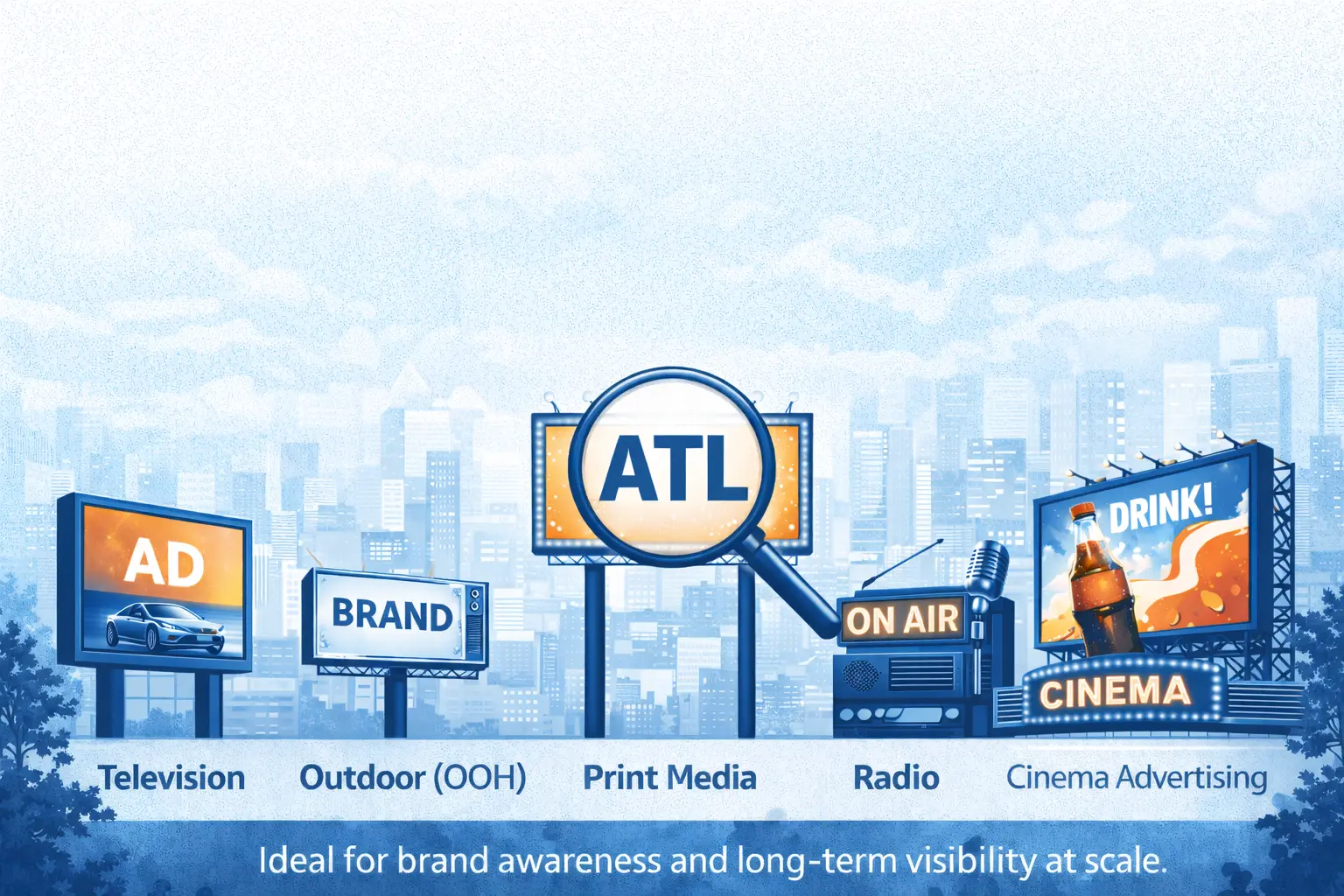
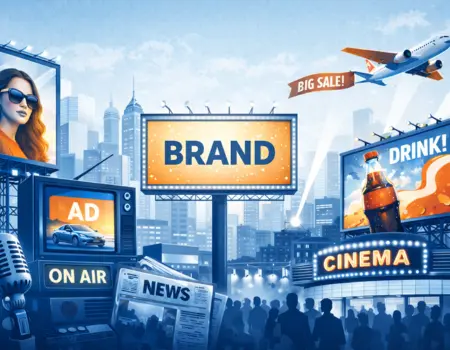
ATL advertising refers to brand-focused communication delivered through mass media channels designed to reach large audiences simultaneously. These channels include television, outdoor hoardings, billboards, transit media, radio, newspapers, magazines, cinema advertising, and high-visibility sponsorships.
The defining characteristic of ATL advertising is its ability to communicate a brand message to a broad audience without narrow targeting. The goal is not immediate action, but brand awareness, perception, and recall.
ATL campaigns are designed to:
- Presence: Establish brand presence at scale
- Familiarity: Build familiarity across diverse audiences
- Credibility: Strengthen credibility through visibility
- Growth: Support long-term business growth
Unlike short-term performance tactics, ATL advertising works by shaping how a brand is perceived over time.
How ATL Advertising Differs From Digital-Only Marketing
Digital marketing and ATL advertising serve fundamentally different roles, even though they are often compared. Digital marketing is transactional by nature, focusing on measurable actions such as clicks, leads, conversions, and immediate responses.
ATL advertising, on the other hand, is transformational, as it works on shaping brand perception, awareness, and trust before any transaction takes place.
While digital marketing answers questions like why someone should click an ad, buy now, or fill out a form, ATL advertising addresses a deeper and more critical question, why a consumer should trust a brand in the first place.
Brands that rely only on digital channels often face higher acquisition costs, weaker trust, and slower scalability because they lack mass familiarity. ATL advertising bridges this gap by building a strong brand foundation that makes all digital marketing efforts more effective.
Why Top Advertising Agencies Still Invest in ATL Campaigns
How ATL Campaigns Build Mass Brand Visibility
Brand visibility is not about being seen once. It is about being seen consistently and confidently.
ATL campaigns place brands in unavoidable public spaces such as roads, highways, transit hubs, prime-time television slots, and widely circulated publications. These placements ensure repeated exposure across large populations.
This consistent exposure:
- Familiarity: Makes brands feel familiar
- Presence: Signals market presence and seriousness
- Positioning: Positions brands as established players
When people see a brand repeatedly in high-visibility environments, they subconsciously associate it with success, scale, and stability. This perception is extremely difficult to achieve through digital ads alone.
Role of ATL Advertising in Market Leadership
Market leaders are not always the best products. They are often the most visible and trusted brands.
ATL advertising plays a critical role in helping brands move from being one of many options to being the default choice in a category.
Through consistent ATL campaigns, brands can:
- Dominance: Dominate geographic markets
- Leadership: Signal category leadership
- Authority: Build authority beyond pricing or offers
This is why top advertising agencies continue to recommend ATL for brands that aim to lead markets rather than just compete in them.
Reach, Recall, and Credibility in ATL Advertising
Why ATL Advertising Creates Strong Brand Recall
Brand recall is built through repetition in environments where attention is not fragmented.
Large ATL formats such as billboards, television screens, and outdoor displays command attention without the distractions of scrolling, notifications, or competing content.
ATL advertising strengthens recall by:
- Visuals: Reinforcing brand visuals and colors
- Repetition: Repeating key messages across locations
- Routine: Embedding brands into daily routines
While digital ads are often forgotten within seconds, a well-executed ATL campaign can remain in memory for months or even years.
How Mass Visibility Builds Brand Trust Faster
Trust is built through familiarity, and familiarity comes from repeated exposure.
ATL advertising accelerates trust by making brands appear established, credible, widely accepted, and less risky to choose.
Consumers naturally trust brands they see often, especially in premium and public spaces. This trust directly influences purchasing decisions.
The Long-Term Impact of ATL Advertising Campaigns
ATL Campaigns vs Short-Term Performance Marketing
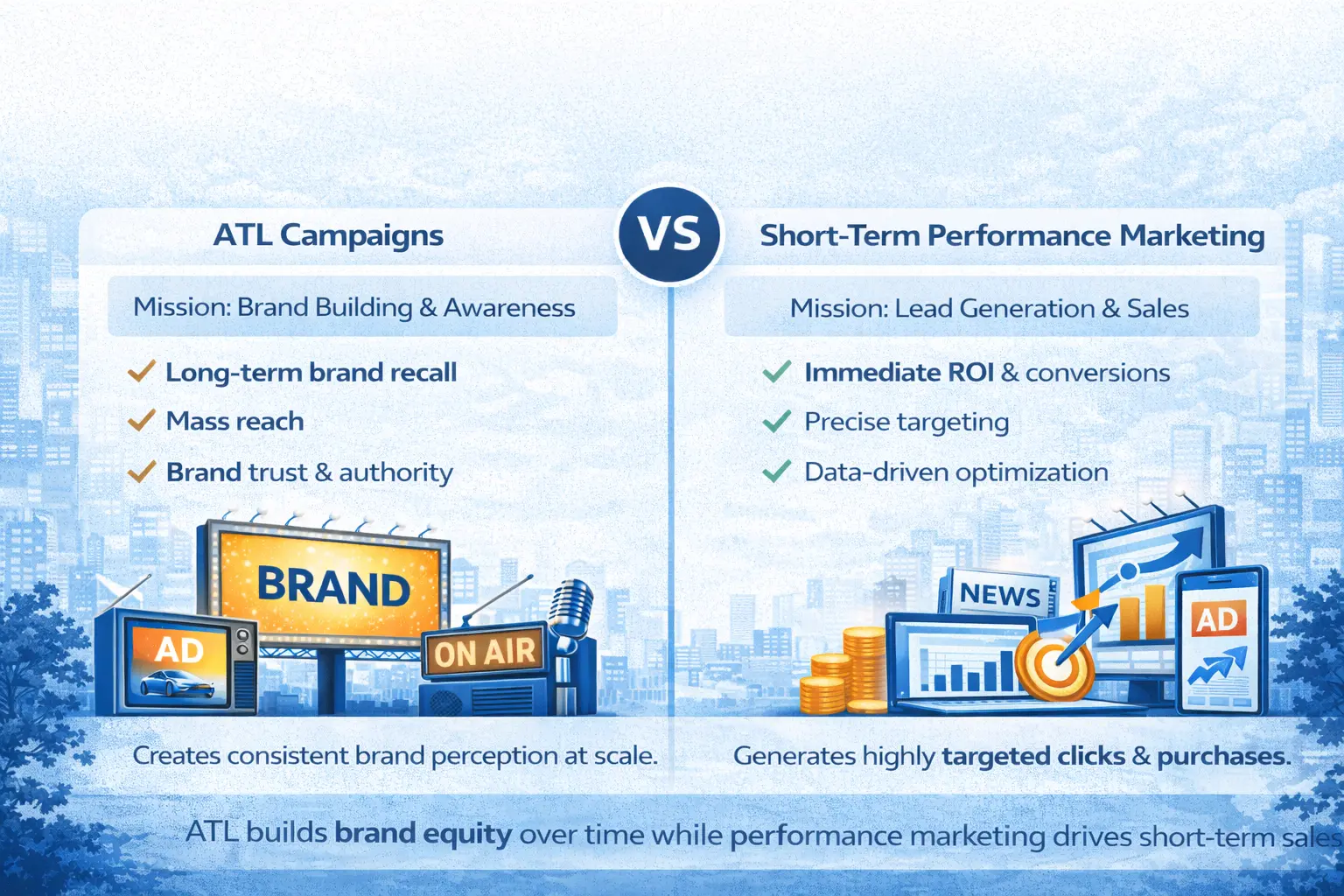
Performance marketing delivers immediate results, but those results are often temporary. ATL advertising delivers long-term value that compounds over time.
While performance campaigns stop delivering results the moment budgets pause, ATL campaigns continue to influence perception long after they end.
ATL advertising helps:
- Efficiency: Lower future acquisition costs
- Effectiveness: Improve effectiveness of digital campaigns
- Demand: Increase branded search demand
- Availability: Build lasting mental availability
Brands that invest only in short-term performance often face rising costs and declining efficiency. ATL balances this by strengthening the brand layer.
How ATL Advertising Builds Long-Term Brand Equity
Brand equity is the intangible value that allows brands to charge premiums, retain customers, and survive market fluctuations.
ATL advertising contributes to brand equity by:
- Emotional connection: Creating emotional connections
- Narrative: Establishing consistent brand narratives
- Positioning: Positioning brands beyond functional benefits
Over time, strong brand equity reduces dependence on discounts, promotions, and aggressive sales tactics. This is why brands with strong ATL presence often enjoy higher loyalty and better margins.
When ATL Advertising Works Best for Brands
Brand Growth Stages Ideal for ATL Campaigns
ATL advertising is most effective when brands reach a stage where scale becomes essential.
It works particularly well for:
- Expansion: Growing brands expanding into new cities
- Launches: Businesses launching new categories or offerings
- Scale: Brands aiming to move from niche to mainstream
Early-stage brands may focus more on digital, but as growth accelerates, ATL becomes critical for achieving mass adoption and recognition.
Budget Readiness for ATL Advertising Success
ATL advertising is not about spending large budgets blindly. It is about strategic allocation aligned with business goals.
Successful ATL campaigns require:
- Objectives: Clear objectives such as awareness, recall, or leadership
- Planning: Media planning based on audience density and geography
- Creative: Strong creative clarity and consistency
With the right advertising agency, even controlled budgets can deliver significant ATL impact when focused on the right channels and locations.
How an Experienced Advertising Agency Executes Successful ATL Campaigns
Strategic Media Planning in ATL Advertising
Media planning determines the success or failure of ATL campaigns.
An experienced advertising agency evaluates:
- Movement: Audience movement and behavior
- Placement: High-impact locations and time slots
- Frequency: Frequency needed for effective recall
- Dominance: Regional and city-level dominance opportunities
The objective is not to be everywhere, but to be visible where it matters most for the target audience.
Importance of Creative Simplicity in ATL Campaigns
ATL advertising communicates in seconds, not minutes.
Effective ATL creative focuses on:
- Messaging: Clear and bold messaging
- Hierarchy: Strong visual hierarchy
- Clarity: Minimal text with maximum impact
- Consistency: Consistent brand elements
Overcomplicated creative fails in mass media environments. Simplicity ensures the message is understood instantly and remembered easily.
Why ATL Advertising Strengthens Digital Marketing Performance
How ATL Advertising Improves Digital Conversion Rates
ATL advertising and digital marketing work best together, not in isolation.
Brands running ATL campaigns often see:
- Engagement: Higher engagement on digital ads
- CTR: Improved click-through rates
- Conversions: Better landing page conversions
- Social: Stronger social media response
This happens because ATL builds familiarity before the digital interaction occurs. People are more likely to engage with brands they already recognize.
Brand Familiarity as a Performance Multiplier
Brand familiarity reduces resistance.
When users encounter a familiar brand online, they:
- Trust: Trust the message faster
- Conviction: Require less convincing
- Decision: Make decisions more confidently
ATL advertising acts as a performance multiplier by reducing skepticism and friction across all digital touchpoints. This leads to better results without increasing digital spend proportionally.
Conclusion: ATL Advertising Is Not Old, It Is Foundational
ATL advertising is not outdated, it is underestimated. In a digital-first world, brands that rely only on performance marketing struggle to stand out, while the strongest brands combine mass visibility with digital precision.
ATL builds awareness, shapes perception, and creates trust at scale, which makes every digital effort work harder and convert better.
For brands serious about long-term growth, market leadership, and sustainable brand equity, ATL advertising is not optional, it is foundational.
Share
Trending Topics
-

-
-
 March 09, 2026
 -
-
 Feb 23, 2026
 -
-
 Feb 09, 2026
 -
-
 November 19, 2025
How Are Modern Advertising Agencies Using AI to Boost Campaigns
-
 November 17, 2025
How the Best Outdoor Advertising Agencies in India Stand Out
-
 November 12, 2025
 -
 November 10, 2025
How Do You Choose the Best Advertising Agency for Your Business
-
 November 07, 2025
 -
 November 01, 2025
Abhishek Gupta
A strategy-led growth architect blending business insight, brand thinking, and execution rigor to build scalable, market-relevant brands.